SR, LR, LRM, ER, ZR – if you’re planning a 10-gigabit network, you can’t avoid these abbreviations. But which module is really suitable for which application? Choose the wrong one and you’ll either end up with insufficient range or waste money on performance you’ll never need.
An SFP (Small Form-factor Pluggable) transceiver is a compact, pluggable module used in network devices such as switches, routers or servers. Its function is to convert the device’s electrical signals into optical signals and transmit them via fibre-optic or copper cables – and vice versa. The ‘Pluggable’ in the name is to be taken literally: modules can be swapped whilst the device is running, without having to shut it down.
What makes SFP modules so practical is their versatility. Depending on the module used, the same switch port supports different ranges, wavelengths and data rates – from 1 Gbit/s to 10 Gbit/s and beyond. This allows a device to be flexibly adapted to different network environments without changing the hardware.
For 10-gigabit connections, the SFP+ form factor is now predominantly used – a further development of the original SFP standard with the same physical design but a higher data rate. Choosing the right module depends on three factors: the distance to be bridged, the existing or planned cable type, and the budget.
The terms SR and LR primarily describe the optical range of the transceiver. Specifically, the two modules differ in terms of wavelength, fibre type and laser technology – and consequently also in terms of cost and energy consumption.
SR (Short Range) operates at a wavelength of 850 nm and is designed for multimode fibre (MMF). The core of an MMF fibre, at 50 or 62.5 micrometres, is significantly thicker than that of single-mode fibres, allowing several light paths to travel through the fibre simultaneously. This makes production cheaper – but the light modes interfere with one another as the distance increases, which limits the range. A VCSEL (Vertical-Cavity Surface-Emitting Laser) is used as the light source – it is cost-effective and efficient, but not suitable for long distances.
LR (Long Range) operates at 1310 nm and uses single-mode optical fibre (SMF). With a core diameter of only around 9 micrometres, this fibre allows only a single light path – which drastically minimises signal loss. A DFB laser (Distributed Feedback Laser) serves as the light source; it is more precise and powerful, but also more expensive to manufacture.
SR and LR cover the most common scenarios, but there are further options for special cases:
LRM (Long Reach Multimode): For anyone who has already installed older multimode infrastructure (OM1/OM2) and wants to upgrade to 10G without replacing the cables. LRM uses 1310 nm instead of 850 nm, achieving distances of up to 220 metres even over older multimode fibres. The integrated electronic dispersion compensation (EDC) compensates for signal distortion.
ER (Enhanced Reach): Single-mode, 1550 nm, up to 40 km. For medium to long distances, such as between sites within the same city. Important: For distances under 20 km, an optical attenuator is essential, as the laser is too powerful for short links.
ZR (Zepto Reach): Also 1550 nm, up to 80 km, also single-mode. ZR is not an official IEEE standard, but a cross-vendor convention – with limited interoperability between different manufacturers’ implementations. It is essential to carry out an optical power test of the link before use.
| Feature | SR (Short Range) | LR (Long Range) | LRM (Long Reach Multimode) | ER (Extended Reach) | ZR (Zero Dispersion Shifted Range) |
|---|---|---|---|---|---|
| Typical applications | Data centre, server room | Campus network, building-to-building connections | Upgrading older MMF infrastructure | City connections, medium distances | Long-haul, metropolitan networks |
| Wavelength | 850 nm | 1310 nm | 1310 nm | 1550 nm | 1550 nm |
| Fibre type | Multimode (OM3/OM4) | Singlemode (OS1/OS2) | Multimode (OM1–OM4) | Singlemode (OS1/OS2) | Singlemode (OS2) |
| Fibre core diameter | 50 / 62,5 µm | ~9 µm | 50 / 62,5 µm | ~9 µm | ~9 µm |
| Maximum range | 300 m (OM3) / 400 m (OM4) | up to 10 km | up to 220 m | up to 40 km | up to 80 km |
| Light source | VCSEL | DFB laser | DFB laser | DFB laser | DFB laser |
| Module price (approx.) | €30–200 | €50–300 | €80–250 | €100–500 | €150–700 |
| Cable price | higher (MMF) | lower (SMF) | higher (MMF) | lower (SMF) | lower (SMF) |
| Power consumption | ~1–2 W | ~2–4 W | ~1–2 W | ~2–4 W | ~3–5 W |
| Is an attenuator required? | No | No | No | Yes (< 20 km) | Yes (< 20 km) |
| IEEE standard | 10GBASE-SR | 10GBASE-LR | 10GBASE-LRM | 10GBASE-ER | No official standard |
Manufacturers’ specifications apply under laboratory conditions using properly terminated cables. In practice, attenuation occurs due to connectors, splice points, bends and contamination. As a rough rule of thumb, you should allow for a safety margin of 15–20 per cent on top of the maximum distance.
So, if you are connecting two buildings that are 280 metres apart as the crow flies, you must factor in the actual cable length (often 350–400 m due to cable routing plus patch cables) – and you may already be outside the safety reserve range.
The cost of the modules alone is only part of the equation. Anyone planning a new fibre-optic network must consider the costs of both modules and cabling together.
Assumption: 2 transceivers (1 at each end), 80 m of fibre-optic cable
| Cost | SR solution (OM3) | LR solution (SMF) |
|---|---|---|
| 2× transceivers | ~€80 | ~€160 |
| 80 m cable | ~40 € (OM3 duplex) | ~20 € (SMF duplex) |
| Total cost | ~€120 | ~€180 |
➡ Result: Based on the assumptions used here, the SR variant results in lower annual electricity consumption and, consequently, lower electricity costs.
| Cost | SR solution (OM4) | LR solution (SMF) |
|---|---|---|
| 2× transceivers | ~€120 | ~€200 |
| 1,200 m of cable | ~€960 (OM4 duplex, ~€0.80/m) | ~€240 (SMF duplex, ~€0.20/m) |
| Total cost | not possible (limit ~400 m) | ~440 € |
➡ Conclusion: LR is not only cheaper here, but also the only viable option. Even if you wanted to extend an OM4 connection, the signal would simply no longer be strong enough beyond 400 m.
A single SR transceiver typically consumes around 1.5 W, whilst an LR transceiver consumes around 3 W. That may sound low – but it all adds up in a 48-port rack:
At an electricity price of 0.30 €/kWh and a PUE of 1.5 (typical data centre), this gives:
That’s just under 285 € in additional costs per year solely due to the higher electricity consumption of the LR modules – for 48 ports. In large data centres, this can quickly run into the thousands.
Conclusion: Anyone using LR modules where SR modules would suffice ends up paying more – both at the point of purchase and during operation.
How long is your planned fibre-optic link?
Less than 300 m?
├── Yes → What type of fibre is already laid or planned?
│ ├── Multimode available → SR module
│ ├── Singlemode available → LR module (a bit of a waste, but it works)
│ └── New installation → SR + OM4 (best value overall package)
Over 300 m?
├── Up to 400 m with OM4? → SR on OM4 possible, but a tight fit – LR recommended
├── 400 m to 10 km? → LR module on SMF
└── Over 10 km? → ER (up to 40 km) or ZR (up to 80 km) – different category
To give you a better idea of how SR and LR modules are labelled by leading manufacturers, here is a brief overview from our shop.
SFP-10G-SR (multimode, 850 nm, 300 m) and SFP-10G-LR (singlemode, 1310 nm, 10 km) are the standard designations. For special requirements, there is also the SFP-10G-LR10-I, which supports a link length of 10 kilometres over standard single-mode fibre and is designed for an industrial operating temperature range.
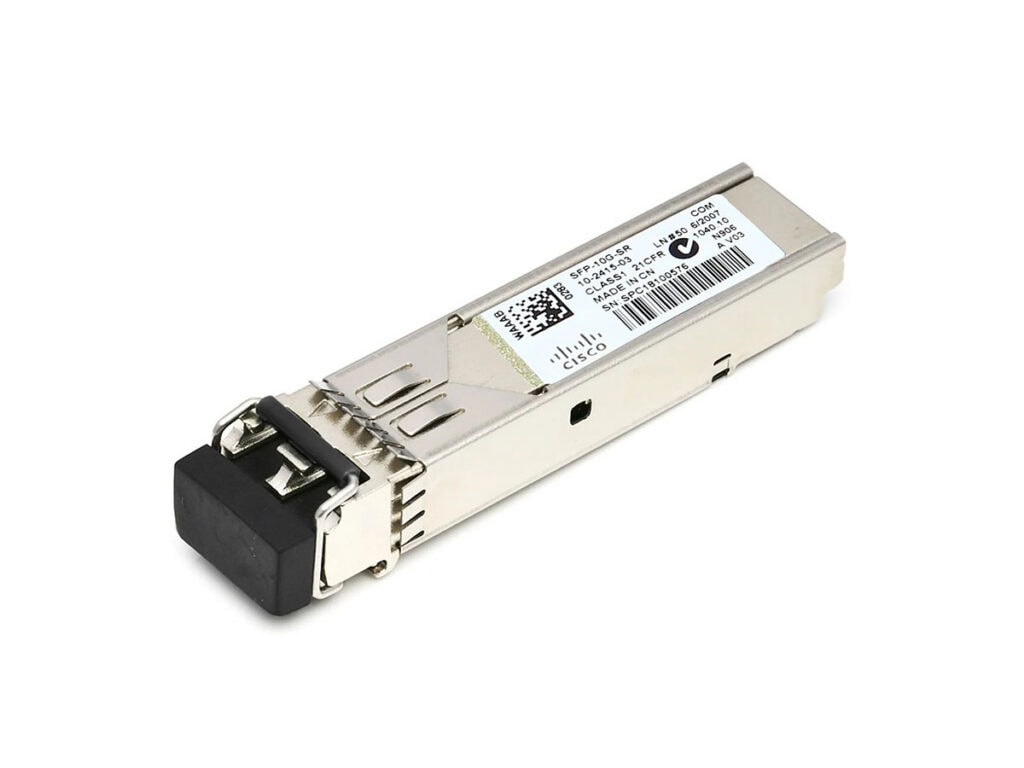
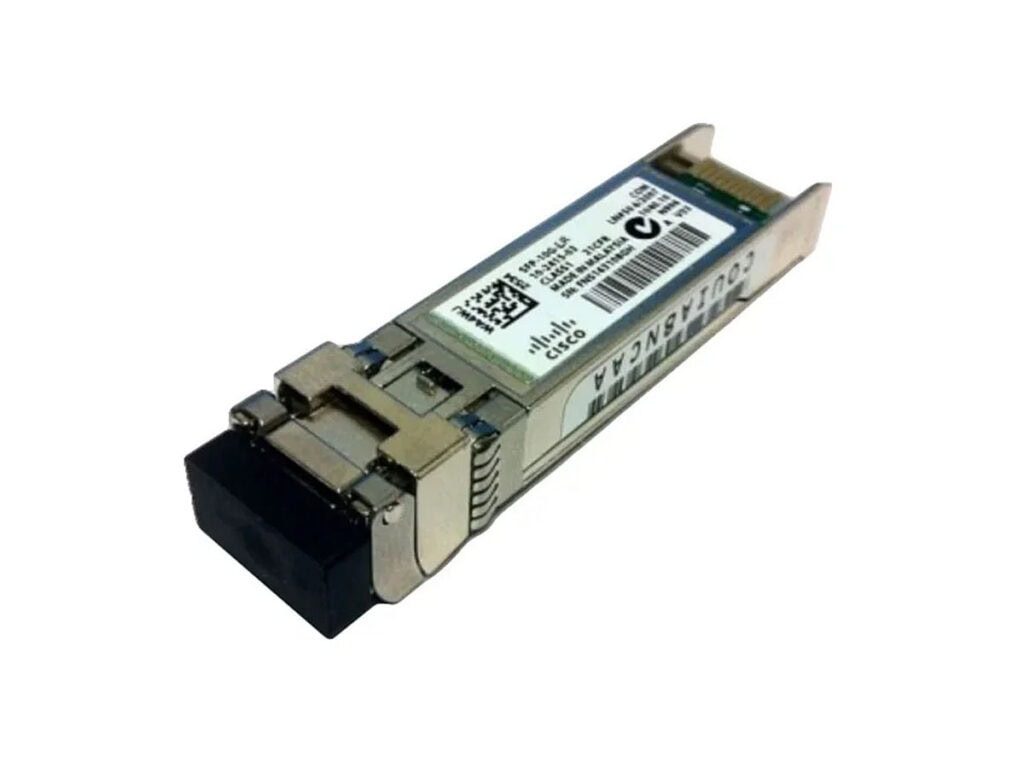
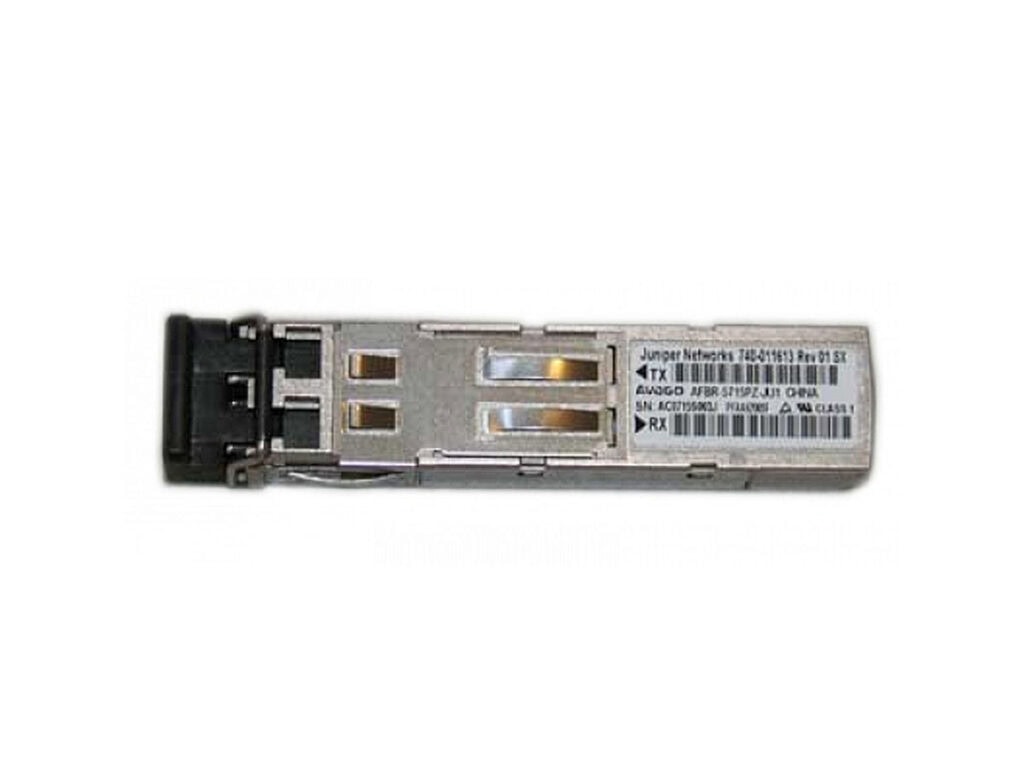
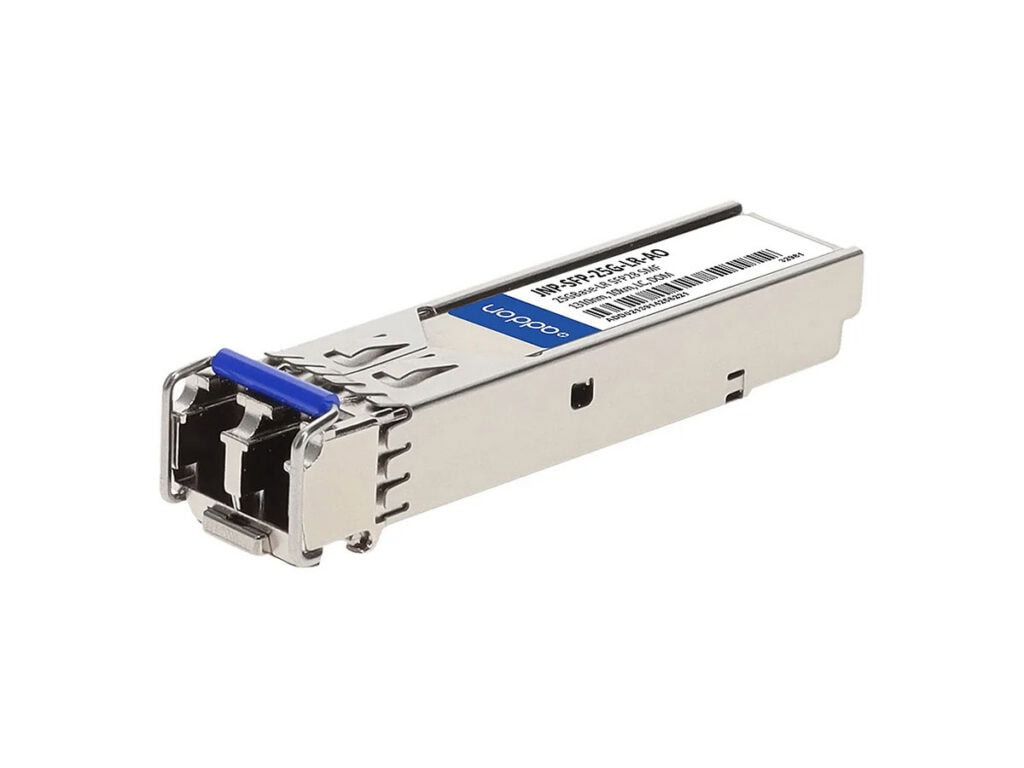
The JNP-SFP-10G-SR is the multimode module for short distances of up to 300 metres at a wavelength of 850 nm, whilst the JNP-SFP-10G-LR, using single-mode fibre and a wavelength of 1310 nm, covers distances of up to 10 kilometres. For higher data rates, Juniper offers the JNP-SFP-25G-LR, which transmits at 25 Gbit/s over single-mode fibre whilst maintaining the same range of 10 kilometres.
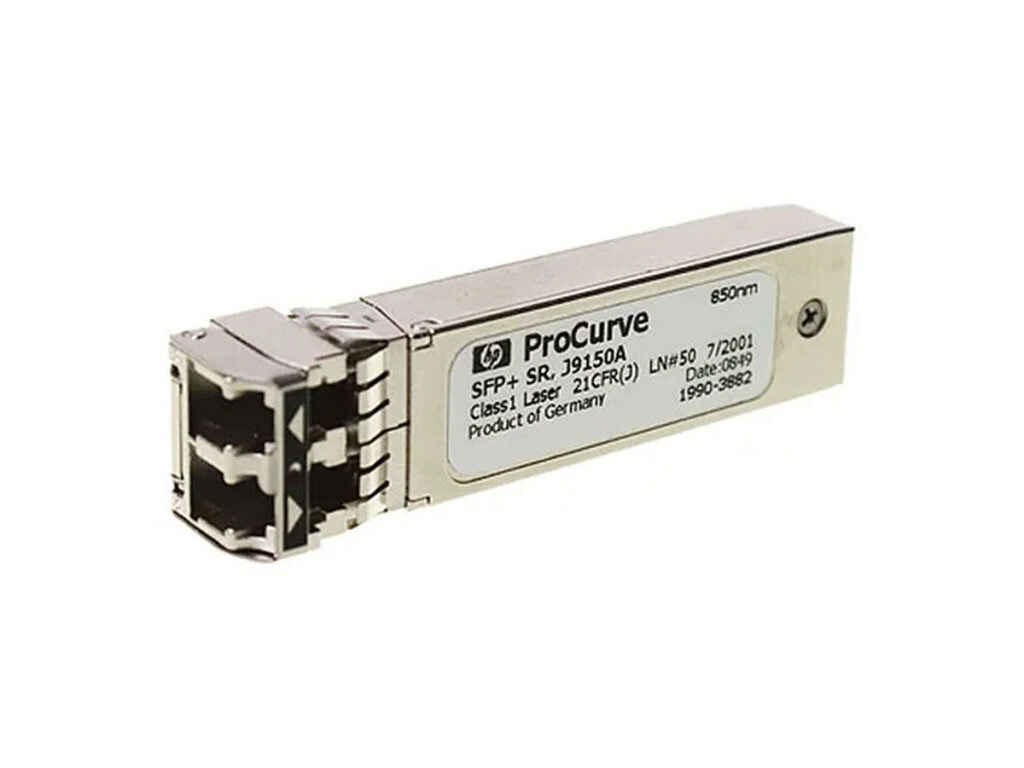
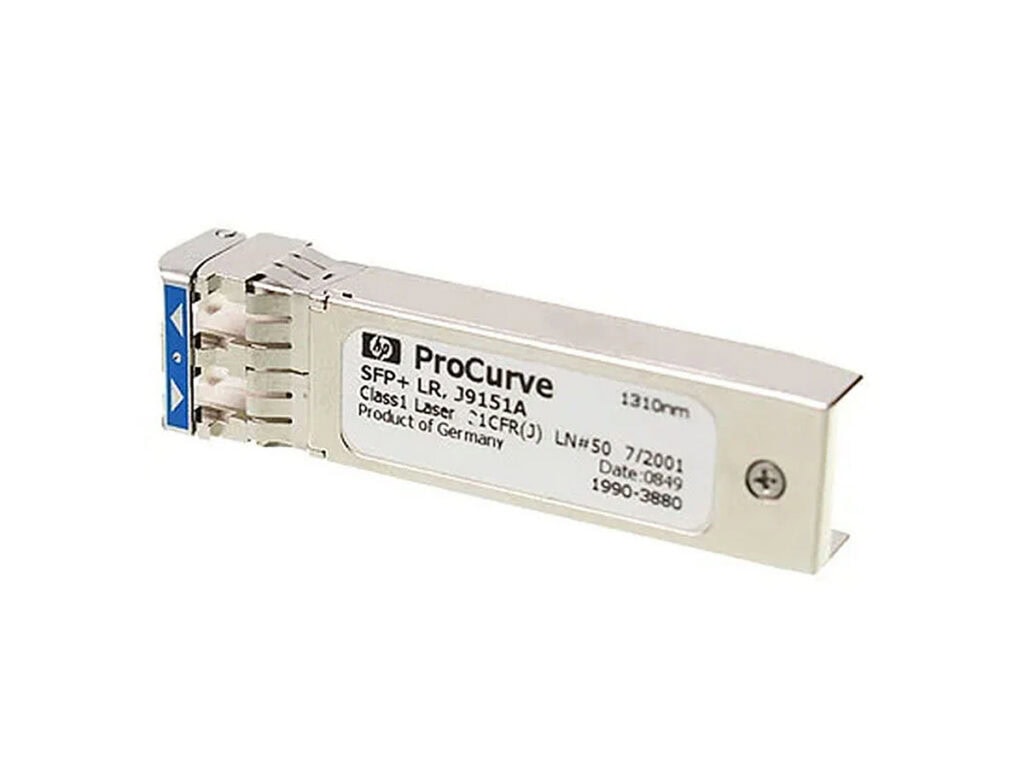
The HPE X130 10G SFP+ LC SR (J9150A) is the multimode module for short distances of up to 300 metres, whilst the HPE X130 10G SFP+ LC LR (J9151A) is the single-mode variant for distances of up to 10 kilometres. Both modules are designed to the SFP+ form factor and optimised for use in HPE switches from the corresponding series.
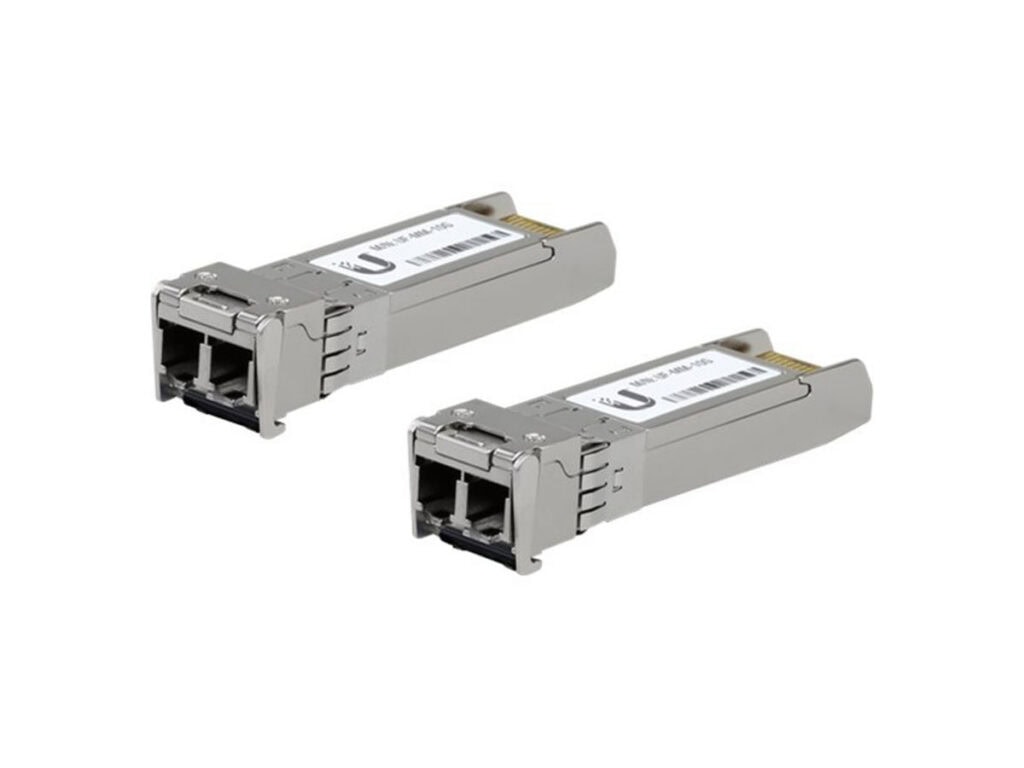
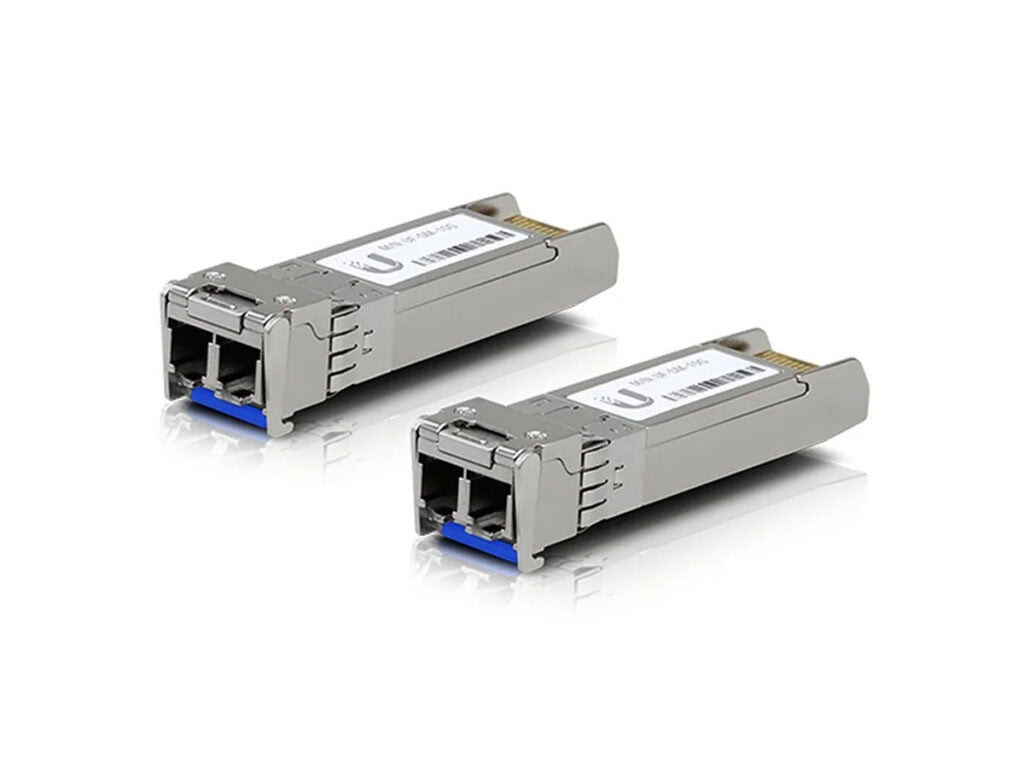
The UF-MM-10G is the multimode module (equivalent to SR) for short distances, whilst the UF-SM-10G is the single-mode variant (equivalent to LR) for longer distances. The prefix ‘UF’ stands for UniFi Fibre – both modules are specifically optimised for use in UniFi switches with SFP+ ports.
Short answer: No. Connecting an SR module directly to an LR module will not work – the wavelengths are incompatible (850 nm vs. 1310 nm) and the fibre types are also incompatible. Anyone connecting a multimode cable to a single-mode transceiver risks significant signal loss or even damage to the module. Always ensure that the fibre type is the same on both sides and that the wavelengths match.
Data centre: Connections between servers, switches and storage within a building or even within a single room are almost always less than 100 metres. SR modules on OM3 or OM4 fibre are a common choice here. They are designed for short distances and, depending on the model, typically have a lower power consumption than comparable LR modules.
Campus network / multiple buildings: As soon as connections between buildings or longer fibre-optic links come into play, distances can quickly reach 500 metres, 1 km or more. Here, LR on SMF is the right choice. Another advantage of SMF is that single-mode cables are more resilient to temperature fluctuations and have significantly lower attenuation values per kilometre than multi-mode cables.
Hyperscale / multiple sites: LR is usually insufficient for connecting geographically dispersed data centres. In such cases, ER or ZR are used.
How future-proof is the chosen infrastructure?
Anyone installing OM4 multimode fibre today can start with SR modules at 10G – but upgrading to 100G will be difficult. Whilst OM4 fibres theoretically support 100G over short distances, the range is significantly reduced. Compared with multimode fibres, single-mode fibres often offer greater scope for higher data rates and longer transmission distances in the future. However, which transmission standards will actually be supported in the future depends on the transceivers and network components used. 10G, 25G, 100G, 400G – everything runs over SMF, and the reach remains the same.
Recommendation for new installations outside buildings: if in doubt, lay single-mode fibre, even if only 10G is required today. This means that re-cabling can be avoided when bandwidth is expanded at a later date.
There is no single module that is universally better. The choice between SR and LR depends on three factors: distance, infrastructure and budget – and all three must always be considered together.
For those working within a single building, with distances of less than 300 metres, and installing a new multimode infrastructure: SR on OM4 is the most cost-effective solution. For those connecting buildings, planning outdoor routes or looking to scale in the long term: LR over SMF is the better investment, even if it appears more expensive at first glance. And for those with both scenarios in a single network – which is usually the case – simply use both: SR in the data centre core, LR for the uplinks and external connections.
In our shop, you’ll find suitable SR and LR transceivers for your network infrastructure from leading manufacturers such as Cisco, HPE, Juniper and Ubiquiti. Simply use our enquiry form – we’ll be happy to help you choose the right transceiver.
SFP+ is an evolution of the standard SFP format. Whilst traditional SFP modules were designed for 1 Gbit/s, SFP+ supports data rates of up to 10 Gbit/s. The physical form factor is identical – SFP+ is backwards compatible with SFP ports (but not vice versa for 10G).
In principle, yes – most alternative manufacturers offer pre-programmed modules for the most common switch platforms. However, some manufacturers (particularly Cisco) rely on manufacturer detection and block non-certified modules by default. This can often be bypassed via the CLI (using ‘no service unsupported-transceiver’ in Cisco IOS), but you should be aware that the manufacturer may raise this issue should you require support.
No. Both types of module typically use LC duplex connectors. This applies to both multimode and single-mode fibre cables. However, be careful with MTP/MPO connectors, which are used in some high-density installations – these fall into a different category.
The mechanical service life is typically stated as 7 to 10 years. In practice, modules are often replaced sooner – either because they have been damaged (the most common cause being contamination of the optical surfaces by dirty fibre connectors), or because network upgrades require new form factors. Regular cleaning of the LC connectors using suitable cleaning pens significantly extends their service life.
Yes, but with some limitations. LR modules are designed for distances ranging from a few hundred metres to 10 km. Over very short distances (less than 100 m), the laser may be too powerful and overload the receiver. In such cases, an optical attenuator – a small, inexpensive component that plugs into the connector – can help.
Technically, it is possible, but not recommended. SR modules are specified for OM3 and OM4. On older OM1/OM2 fibres, the reliable reach is significantly reduced – in some cases to less than 30 m for 10G on OM1. In such cases, LRM is the better choice.