The server market is growing – driven by AI and increasing demands on data centres. Most companies that come to us do not need a high-performance server for AI applications. They need a server that runs reliably, stores data securely and is a sound investment in the long term.
Technically speaking, a server is a system that provides resources, data or services to other computers (clients). It performs key tasks within the corporate network and ensures that applications, files or databases are reliably available at all times. What matters is what you intend to run on it:
The crucial question before any purchase is therefore not ‘Which server is the best?’. But ‘What workload, what level of reliability and what growth am I planning for the next three to five years?’. The answer almost automatically determines the appropriate server type.
Servers differ less in terms of what they can do than in their design, scalability and where they are deployed. Below, we outline five key types of server and their areas of application.
Tower servers resemble a robust desktop PC in appearance and can be placed freestanding in a room without the need for a 19-inch rack. They are relatively quiet, easy to install and can be operated without any problems in an office or a small server corner.
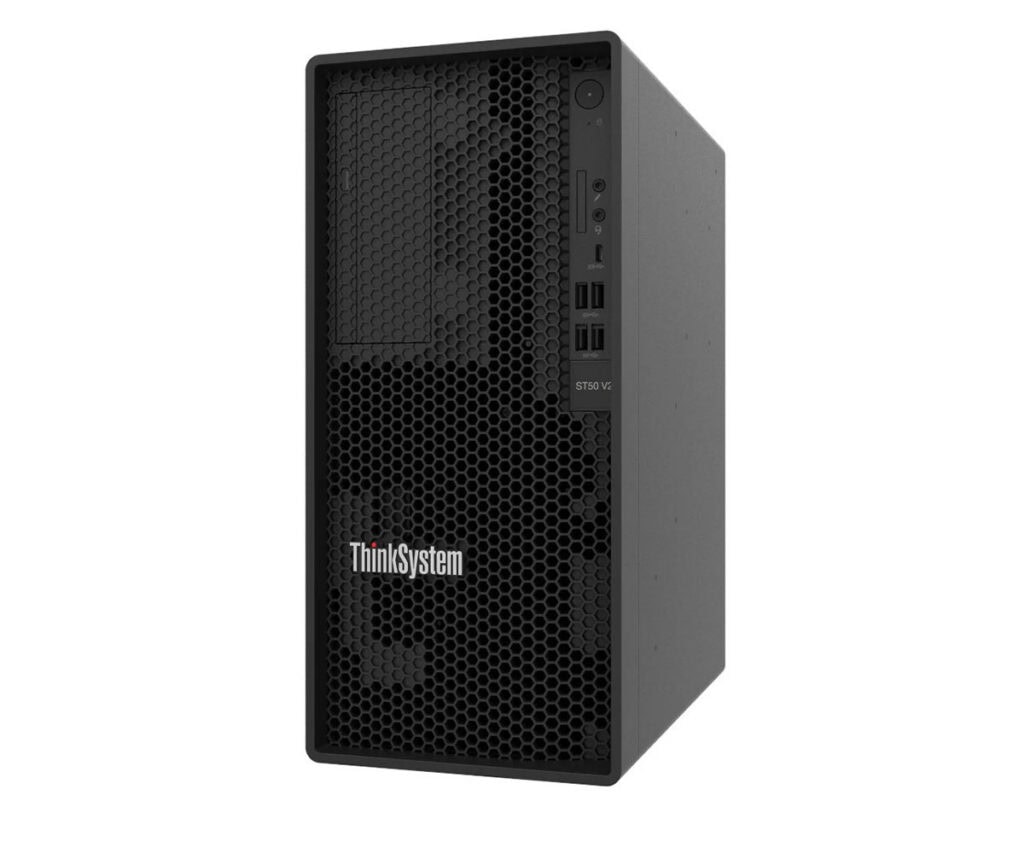
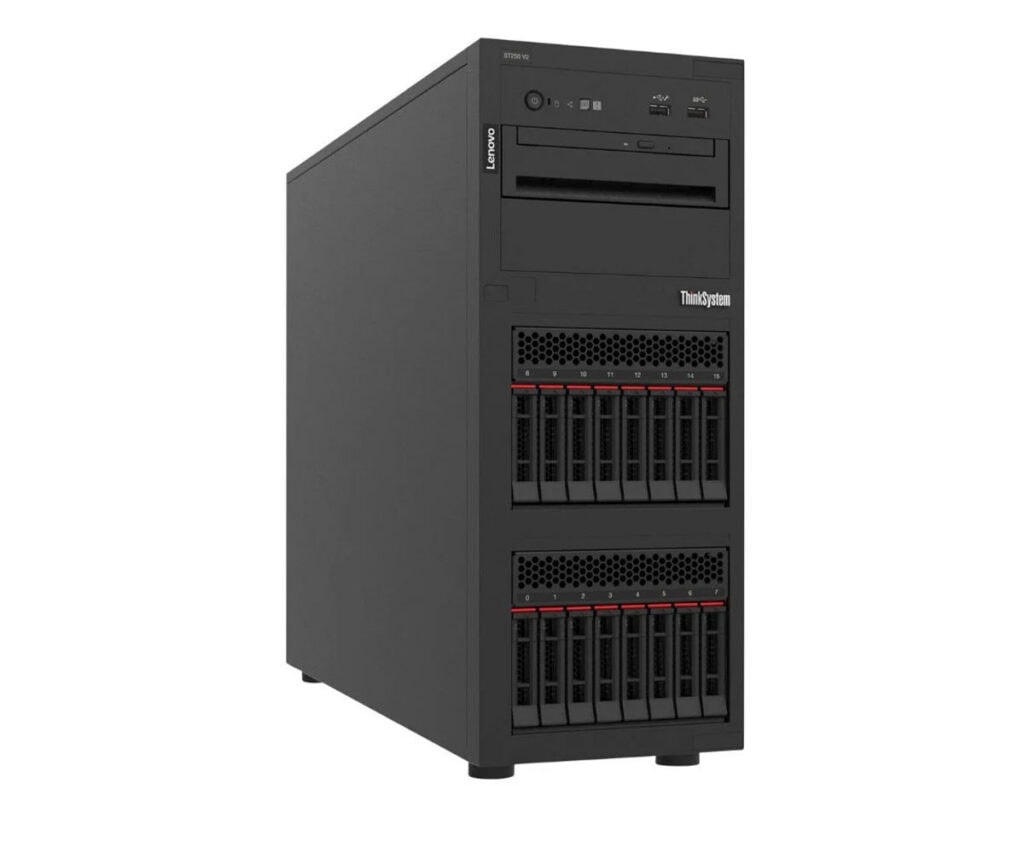
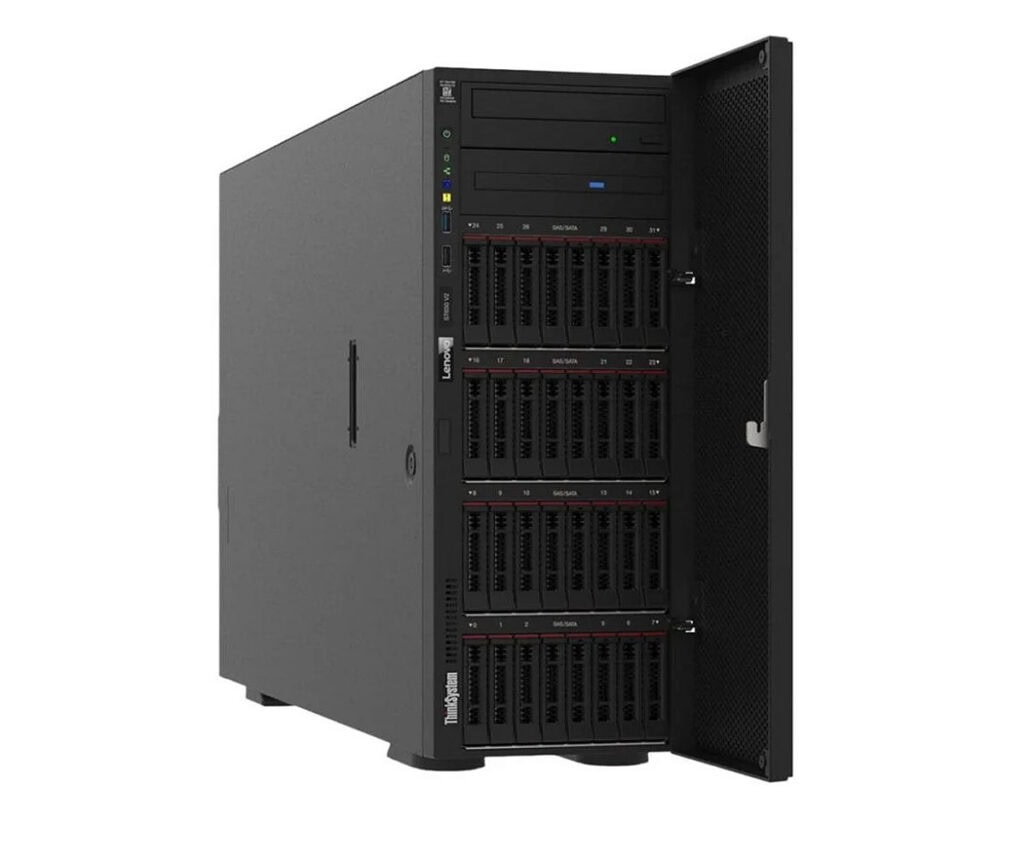
For small businesses, branch offices or tradespeople, they are often the most cost-effective entry-level option – for example, for file storage, user management or a manageable number of virtual machines. A system such as the Lenovo ThinkSystem ST50 V2 with an Intel Xeon E processor meets precisely these requirements, whilst an ST250 V2 with hot-swap drives and a Titanium power supply already offers significantly more capacity for virtualisation. For those planning to scale up to data centre level using tower-format systems, the ST650 V3 offers a DDR5 system on a par with rack-mounted servers.
Tower servers take up relatively more floor space, and once you reach a certain number. Also the cabling becomes difficult to manage. For operating multiple servers, a rack-mounted configuration is usually the better choice.
Rack servers are by far the most common form factor in companies with their own IT infrastructure. They are mounted in 19-inch racks to save space. A 42U rack can accommodate an entire floor’s worth of computing power, storage and networking equipment – neatly cabled and accessible for centralised maintenance.
The major advantage is scalability: from a compact 1U system for a single service to a densely packed 2U server for extensive virtualisation, everything can be combined within the same rack. A Lenovo ThinkSystem SR630 V3 in 1U format with a Xeon Gold processor and DDR5 memory is a typical modern virtualisation node; an SR650 V3 in 2U format offers more space for drives and expansion cards. Those who prefer AMD’s high core count and memory bandwidth will find the SR645 V3 to be a powerful alternative.
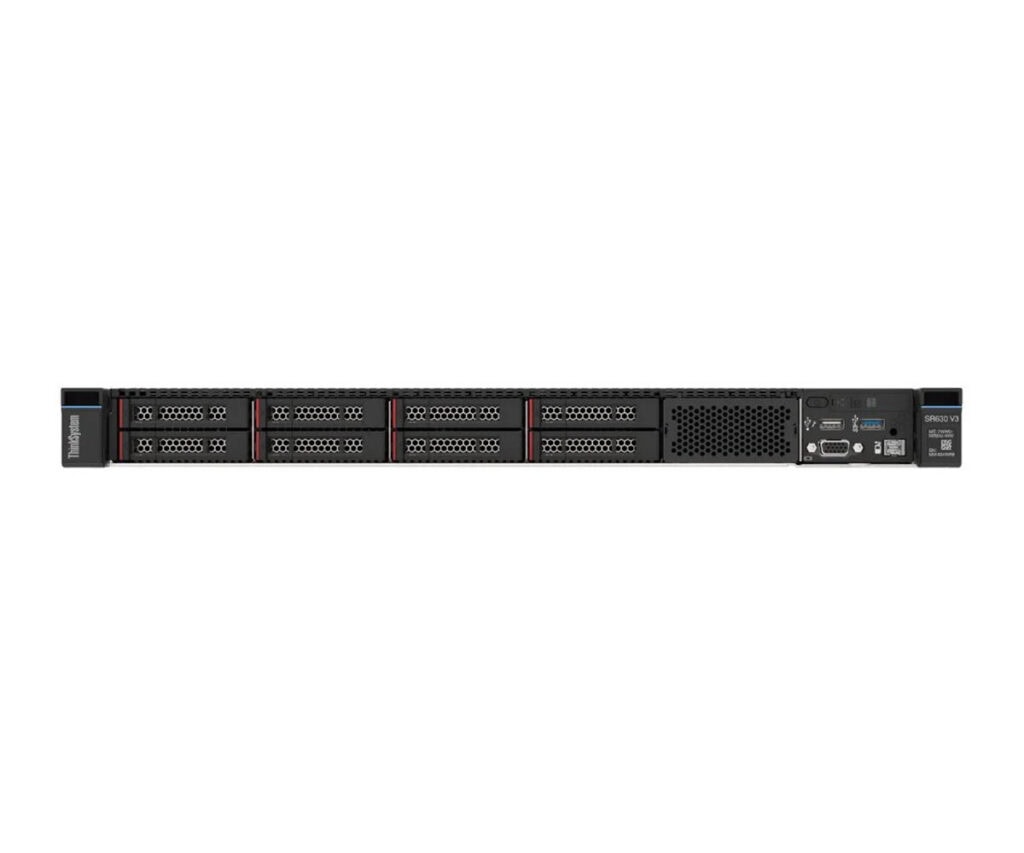
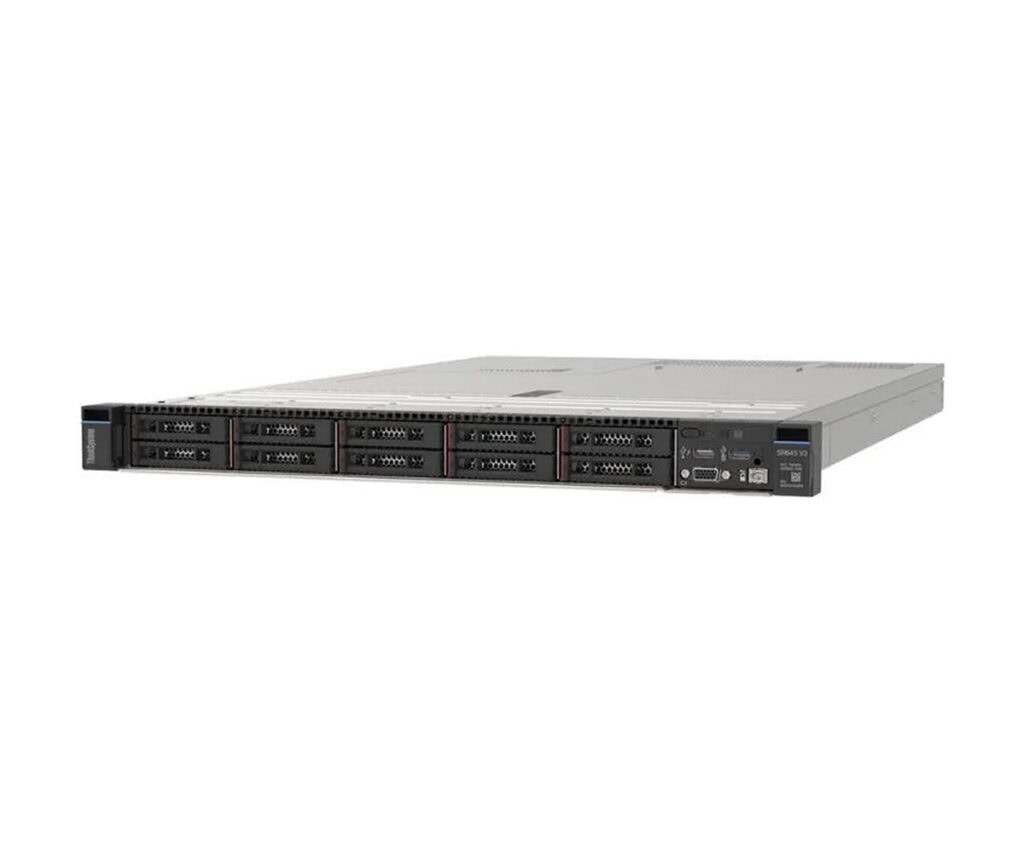
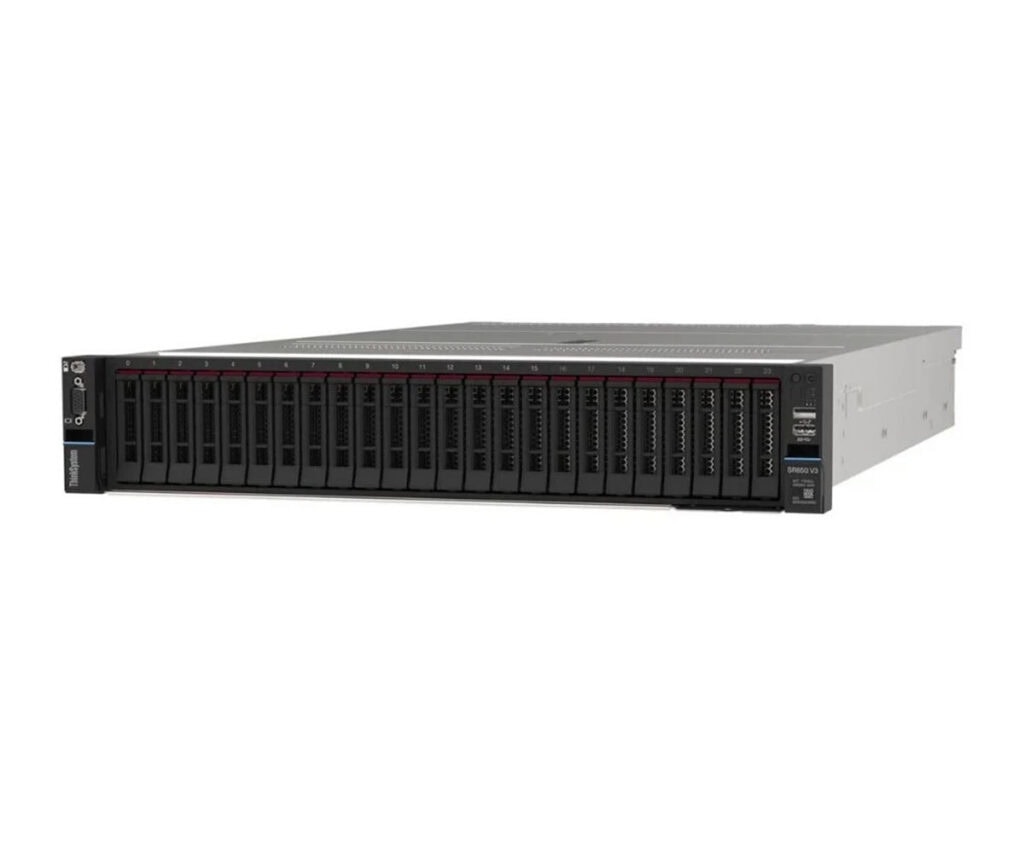
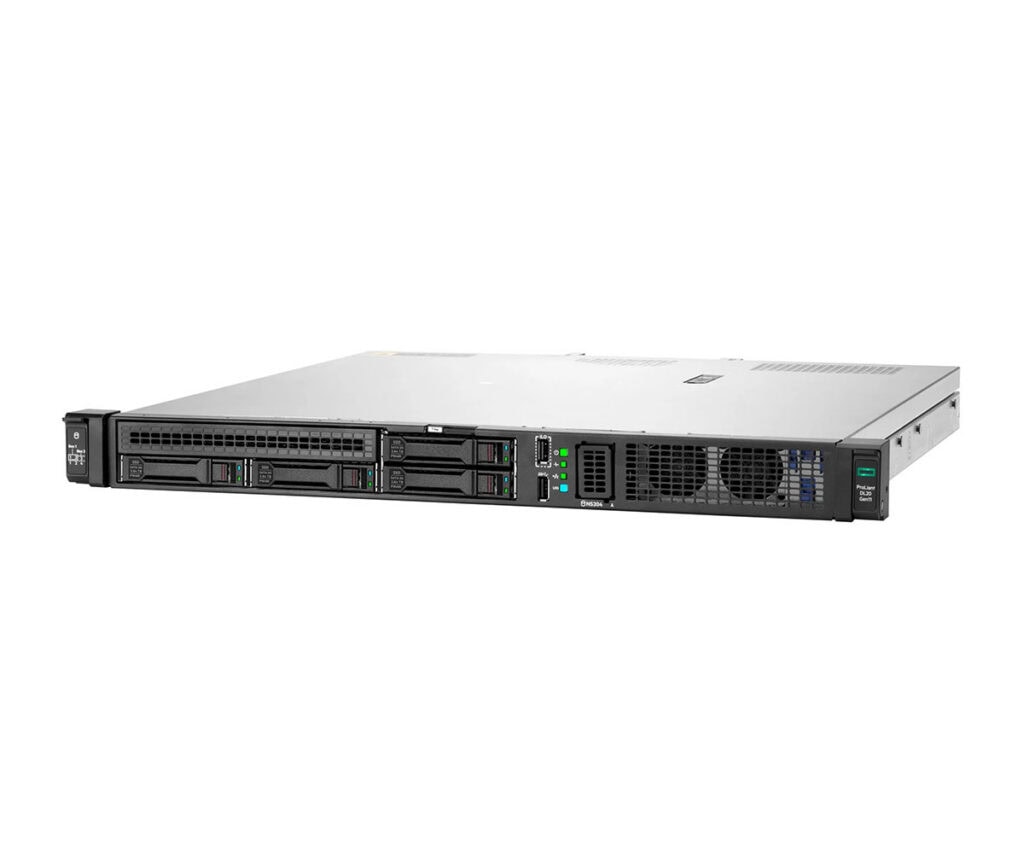
Similarly, the HPE ProLiant Gen11 systems are among the most popular rack servers in the enterprise sector (ITscope Market Barometer Q2/2026). In particular, the HPE ProLiant DL360 Gen11 – a compact 1U server – and the HPE ProLiant DL380 Gen11 – a versatile 2U all-rounder – are among the most sought-after platforms for virtualisation, databases and business-critical applications. For AMD-based infrastructures, the HPE ProLiant DL385 Gen11 offers a high-performance alternative with a high core count and extensive memory capacity. The HPE ProLiant DL20 Gen11, a compact entry-level server, is ideal for smaller branch offices or edge computing scenarios.
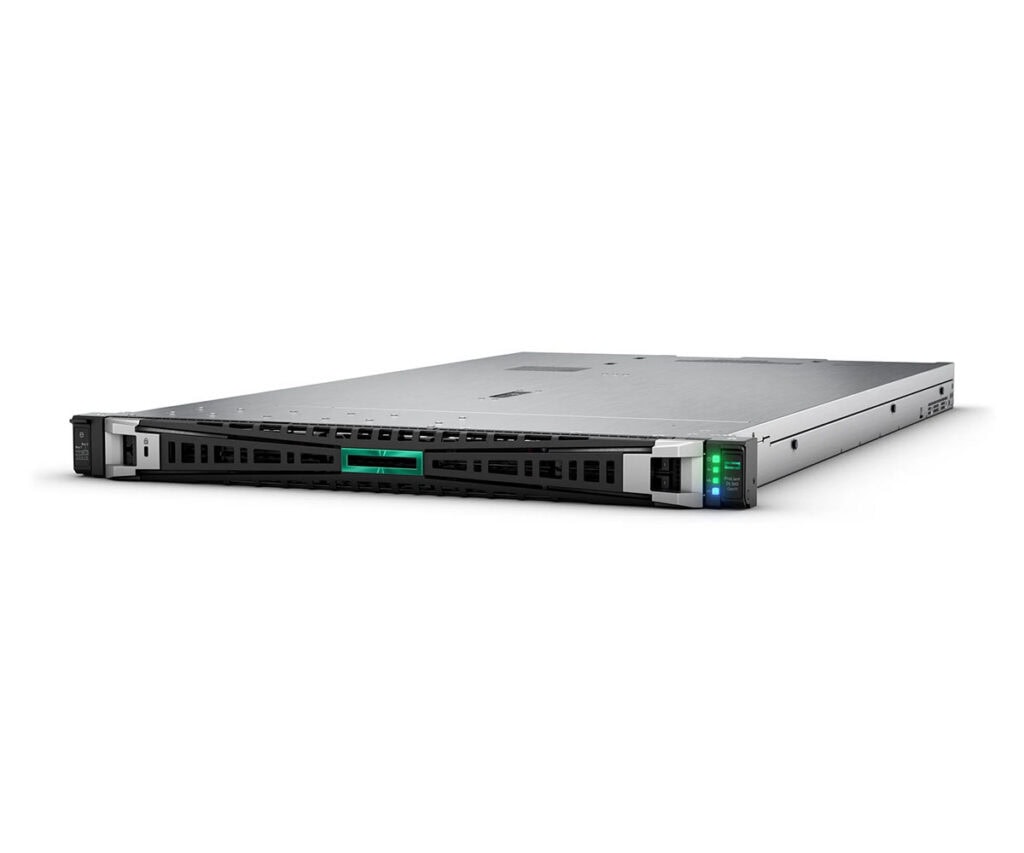
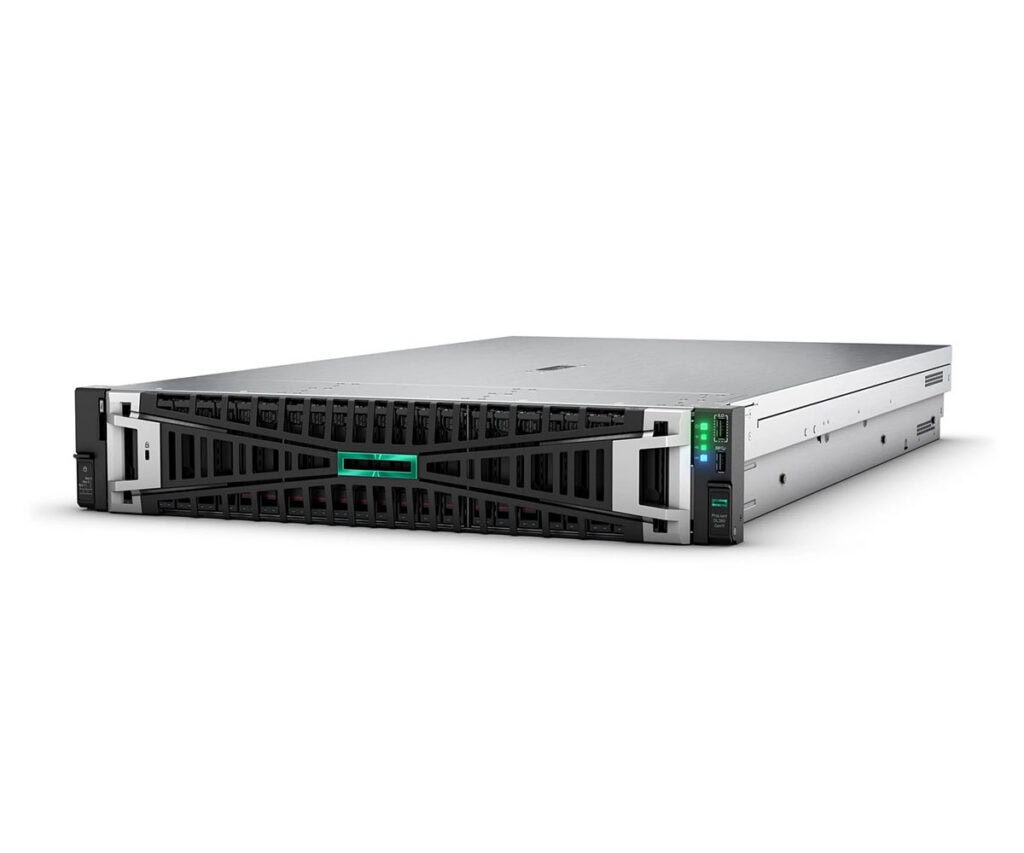
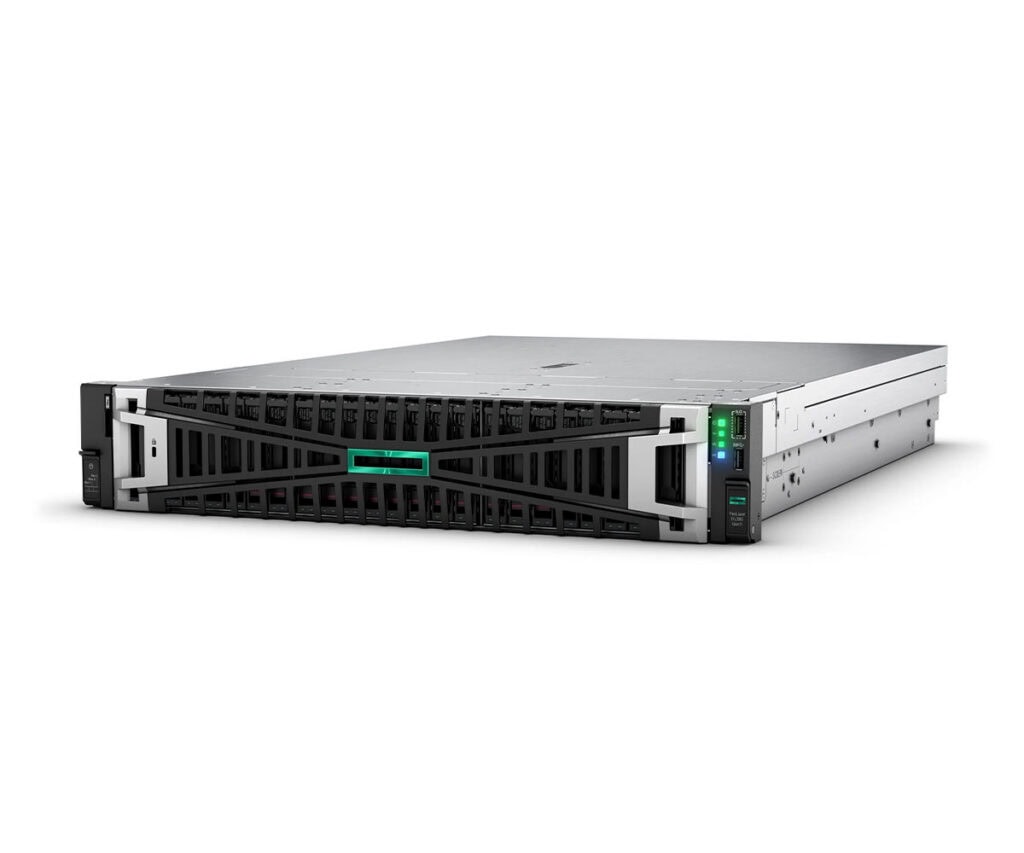
Demand for specialised server systems featuring multiple high-performance graphics cards, powerful processors and ample RAM is steadily increasing. Technically, these are mostly rack servers that differ from conventional systems in terms of their GPU configuration and corresponding cooling systems. They are used for training and running AI models, machine learning or computationally intensive scientific tasks.
Note: For most medium-sized businesses, a dedicated GPU server is currently overkill. Those wishing to use AI productively often do so via cloud services or by utilising individual GPUs in an existing rack server – not via a dedicated training machine. Dedicated GPU hardware makes sense where data must not leave the premises for data protection or latency reasons.
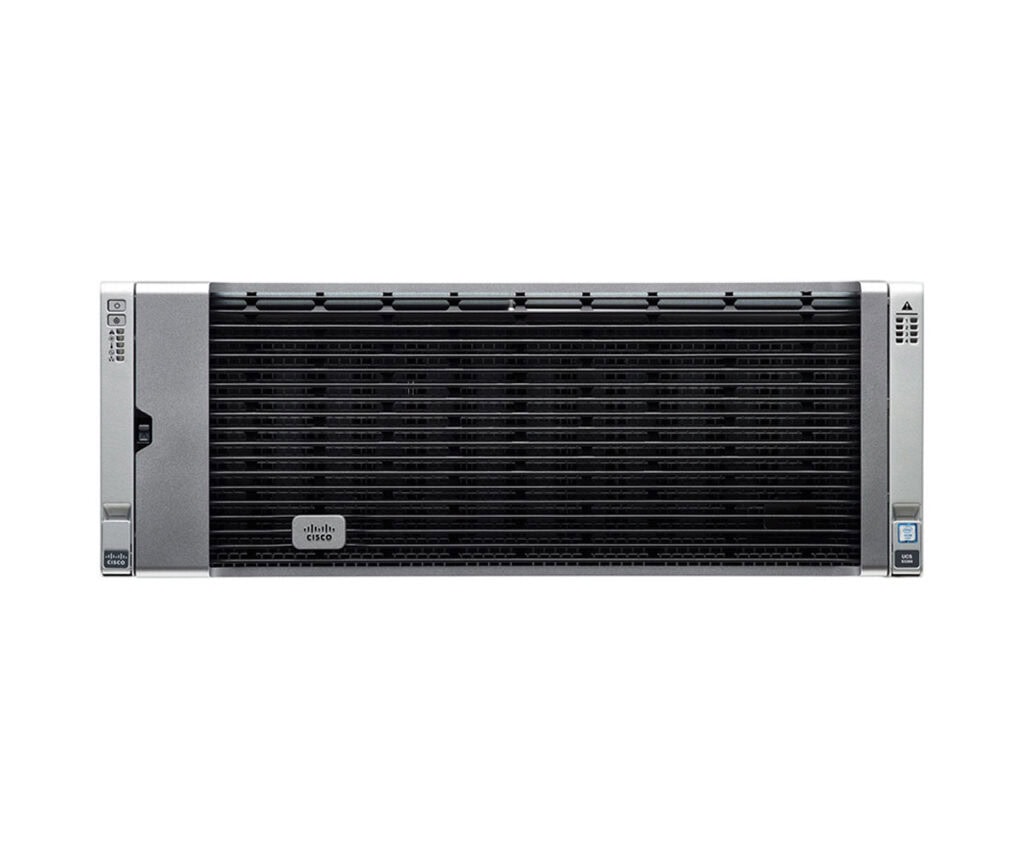
Businesses are generating and storing more data than ever before – for backups, centralised storage, archiving or as the foundation of modern NAS and SAN solutions. Storage servers are designed to provide large capacities securely and with high availability. They are characterised by numerous drive bays, high-performance RAID controllers and are often optimised for throughput rather than pure computing power.
A storage-intensive system such as the Cisco UCS S3260 demonstrates just how different this class of server is from a traditional compute node. For many organisations, the transition to a dedicated storage solution is a seamless one – those planning such a move will find suitable systems in our Storage category as well as from manufacturers such as Synology, QNAP and NetApp.
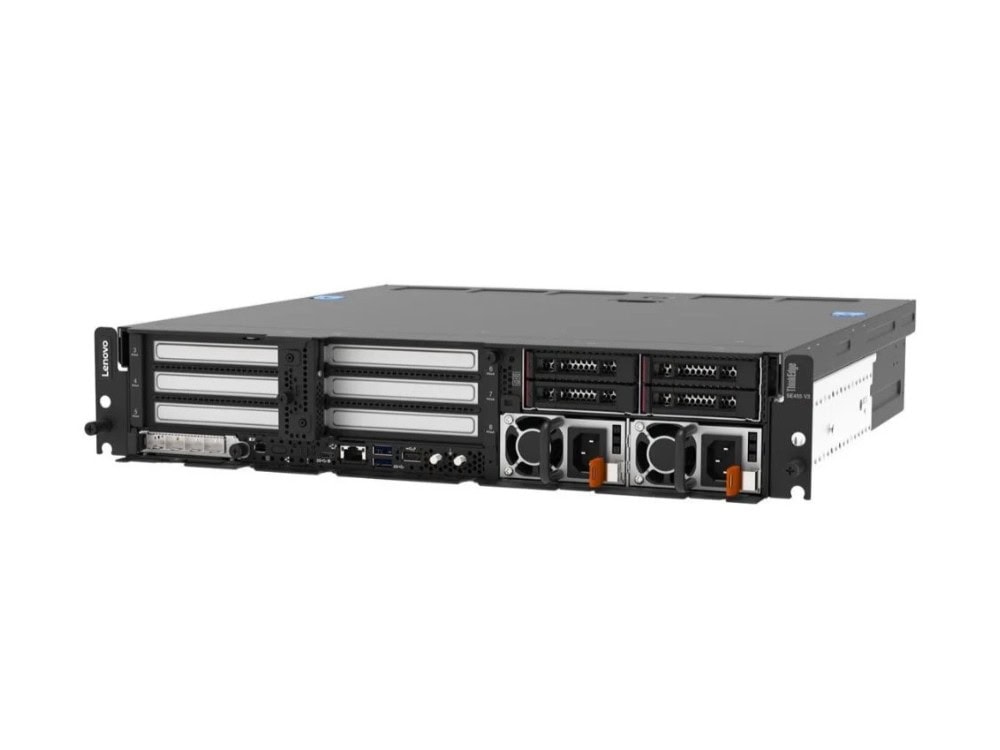
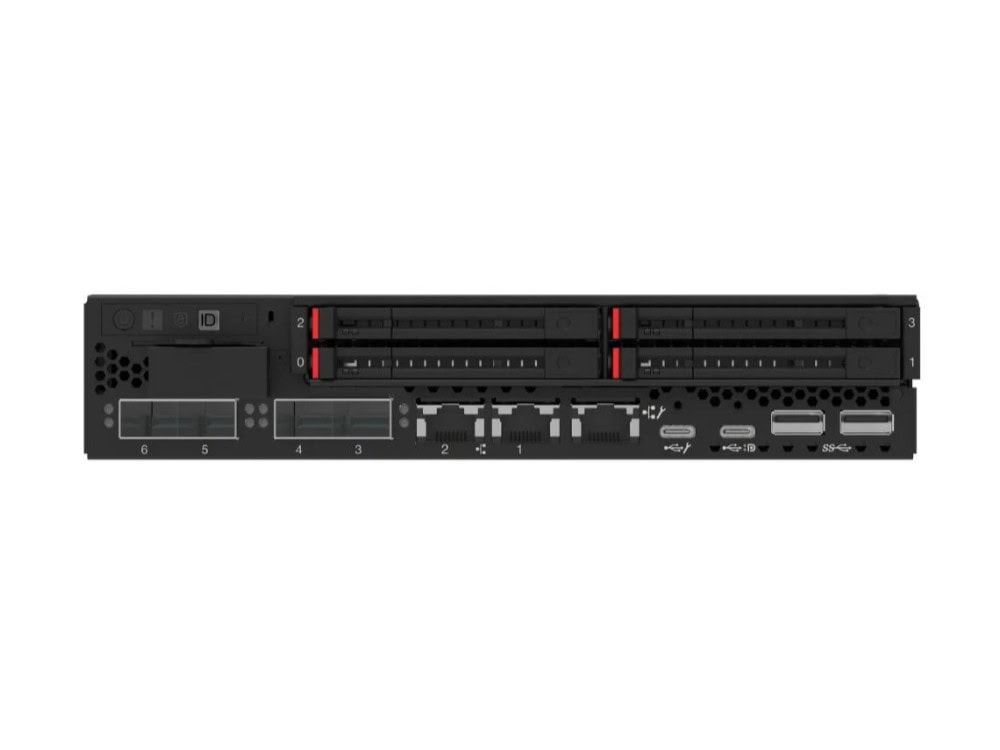
Whilst traditional servers are housed in data centres, edge servers operate where the data is generated: in production halls, branch offices or within IoT applications. Local processing reduces latency and enables applications to be supported in real time. And that without every sensor reading having to take a detour via a central cloud. Edge systems are generally more robust, more compact and designed for harsher environments than standard rack servers.
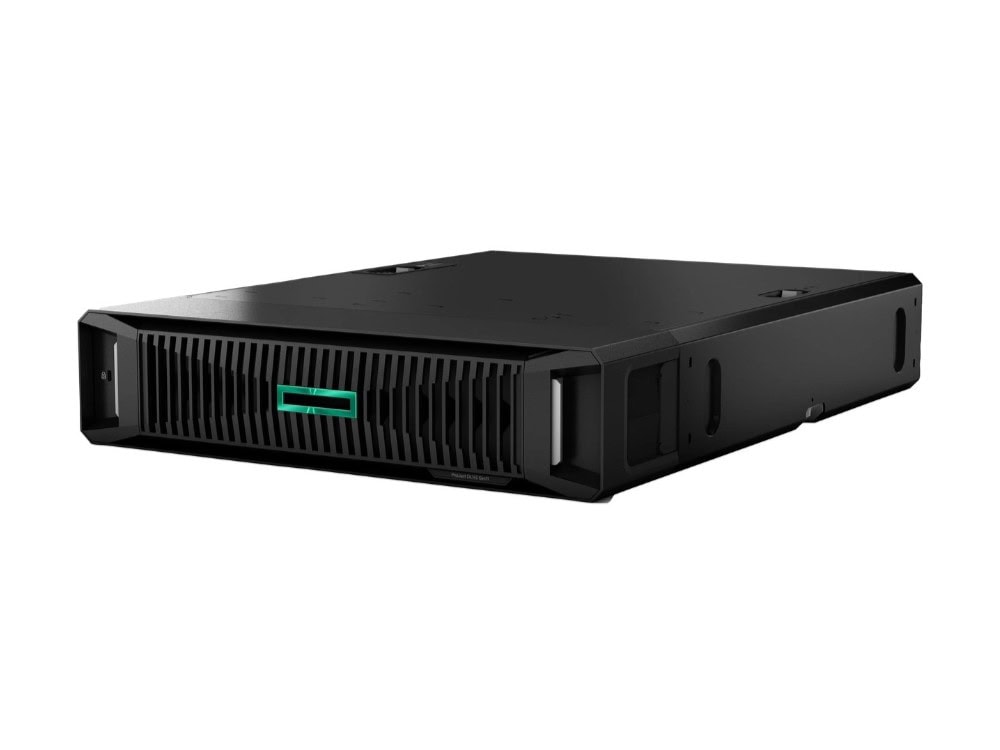
Typical examples of this server class include the Lenovo ThinkEdge SE455 V3 for AI and edge workloads, the compact Lenovo ThinkEdge SE350 V2 for retail outlets and industrial environments. Also the HPE ProLiant DL145 Gen11, which was developed specifically for edge locations.
| Type | Typical applications | Strengths | Points to note |
|---|---|---|---|
| Tower | Small businesses, branch offices, first server | Quiet, affordable entry-level option, no rack infrastructure required | Takes up more space per unit; becomes difficult to manage when using multiple servers |
| Rack | Data centres, virtualisation, expanding IT | Scalable, centralised maintenance, neat cabling | The rack, cooling and cabling must be included in the planning |
| AI/GPU | AI training/inference, machine learning | Very high computing power thanks to GPUs | High costs and power consumption; over-specified for many SMEs |
| Storage | Backup, archiving, centralised data storage | Large capacity, high availability | Focus on storage rather than computing power |
| Edge | Manufacturing, retail outlets, IoT | Low latency, robust, local | Complements the data centre; does not replace it |
The ITscope Market Barometer for the second quarter of 2026 analyses click and order behaviour within the IT channel and paints a clear picture for servers.
According to ITscope, the number of clicks on the 100 most-viewed server products was around 50 per cent higher than in the same quarter of the previous year, and the order volume processed via the platform in the second quarter of 2026 was more than double that of a year earlier. The price trend is striking: the median reseller purchase price for the most-clicked systems rose from around 3,000 to over 6,000 euros. Part of this increase is attributable to higher prices for models that were already in high demand – at the same time, there is a clear trend towards higher-spec configurations, such as those featuring SSD and NVMe storage as well as at least 64 GB of RAM.
In the ITscope analysis, enterprise servers from the current HPE ProLiant generation dominate the top spots for individual systems, supplemented by NVIDIA-based AI accelerators and a few Lenovo ThinkSystem models. The analysis cites the increasing use of AI, the migration to high-density architectures and sustained high demand for virtualisation and data storage as the driving forces behind this trend.
Regardless of the form factor, a few key components determine whether a server is suitable for your workload.
Given the price trends evident in the market barometer, the procurement strategy is almost as important as the choice of hardware itself. Not every system needs to be brand new.
Professionally refurbished servers from previous, but technically up-to-date, generations often offer excellent value for money – with tested functionality and a warranty. For many standard tasks such as file services, smaller virtualisation environments or backup systems, a server generation that is not the very latest is perfectly adequate and significantly more cost-effective. Professionally refurbished servers can be a cost-effective alternative to new equipment. Suitable systems are tested, refurbished and put back into service, allowing existing hardware to continue to be used.
In our range, we therefore offer not only new products but also refurbished server systems. We advise you, based on your specific use case, on which option is best suited to your needs.
The server market in 2026 will be shaped by AI and increasing hardware requirements – as the ITscope Market Barometer clearly demonstrates. The most important principle is this: the best server is the one that suits your actual workload, your reliability requirements and your planned growth – not the one with the most impressive specs on paper.
If you define these requirements clearly, you can make a sound decision within a manageable budget. A well-equipped refurbished system is often the wiser choice compared to expensive new equipment. If you’re unsure about which system to choose, we’ll be happy to assist you, or you can request a personalised quote. We’ll configure the right system for your specific needs.