Every device in your network needs a connection so that data can be continuously received and forwarded. However, modern networks are placing ever-increasing demands on traditional switches. AI-enabled switches can handle high data volumes and use new capabilities to work more efficiently and quickly.
In this blog post, learn about the differences between traditional network switches and AI switches and whether it is worthwhile to use AI switches in your network.
A classic network switch is used to connect various wired network devices, such as computers, servers or printers, in a network. It intelligently forwards data between the connected devices. This process is also known as packet switching.
The data is divided into packets and sent specifically to the respective target device. The MAC addresses of the devices are used for unique identification so that each packet reliably reaches the correct recipient. Through this targeted forwarding, a network switch enables efficient communication within a network or local area network (LAN). It thus acts as a central connection point for all devices in the network and ensures smooth data exchange.
Network switches operate on Layer 2 (data link layer) or Layer 3 (network layer) of the OSI model (however, most switches operate on Layer 2).
There are different types of network switches, which vary in terms of functions, performance and area of application. When selecting a switch, factors such as network size, requirements and scalability should be taken into account.
Unlike traditional network switches, an AI-enabled switch (also known as an ‘intelligent network switch’) is based on AI and cloud-native architecture as well as machine learning (ML) to optimise network operations and make them more efficient. It not only offers fast deployment and zero-trust security, but also reduced operating costs and maximised uptime. An AI switch is particularly suitable for networks with high data volumes, such as large corporate networks, data centres and cloud environments.
These switches continuously analyse data traffic and detect unusual events and security risks in real time. Preventive measures can be taken to predict future bottlenecks and failures at an early stage. In addition, AI switches are automatically configurable, easily optimisable and easy to maintain.
| Feature | Classic network switch | AI switch |
|---|---|---|
| Technology | Traditional Layer 2/3 functions | AI and cloud-native architecture + machine learning (ML) |
| Areas of application | Small to medium-sized networks and office environments | Large corporate networks, data centres, cloud and edge environments (with high data traffic) |
| Security | Basic security features through separate VLANs | Advanced features such as real-time anomaly detection, zero-trust security and preventive measures |
| Performance and scalability | Fixed bandwidth, easy scaling by adding additional switches | Intelligent traffic prioritisation and high scalability for large data volumes |
| Costs and efficiency | Good cost-benefit ratio; no automated energy optimisation but use of Power over Ethernet = cost savings on power supply | Higher acquisition costs; adaptive energy management and machine learning for increased efficiency |
We offer not only classic switches, but also AI-enabled switches for your business, including brands such as Cisco, HPE Aruba, Juniper, Brocade, D-Link, Dell and Netgear. Below you will find a selection of suitable switches.

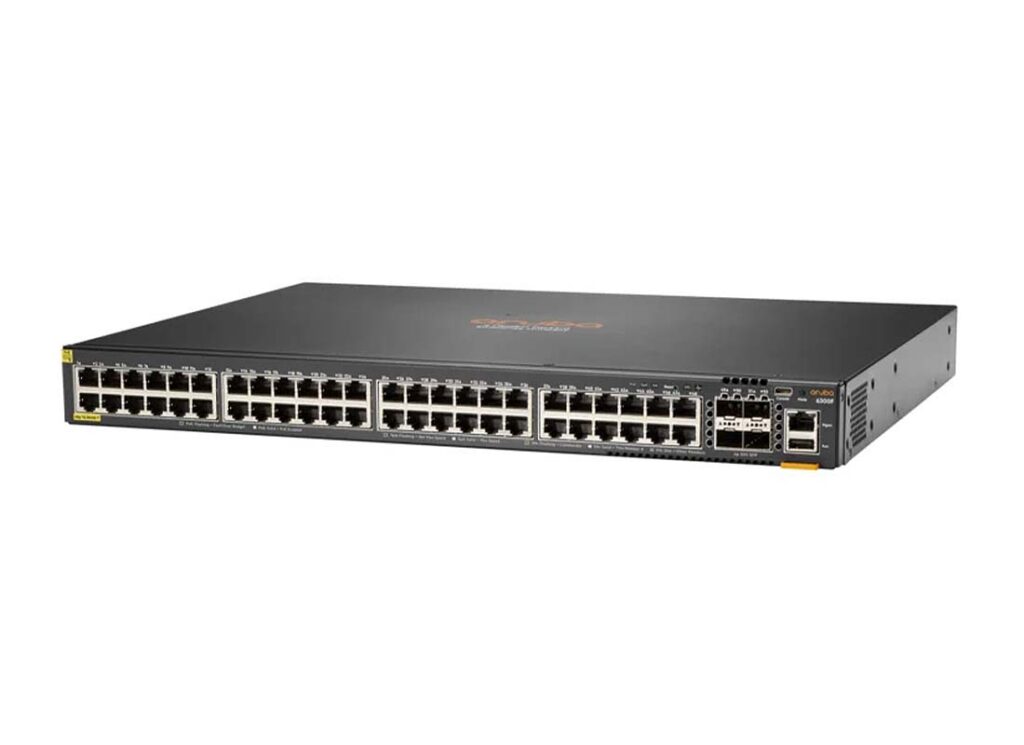
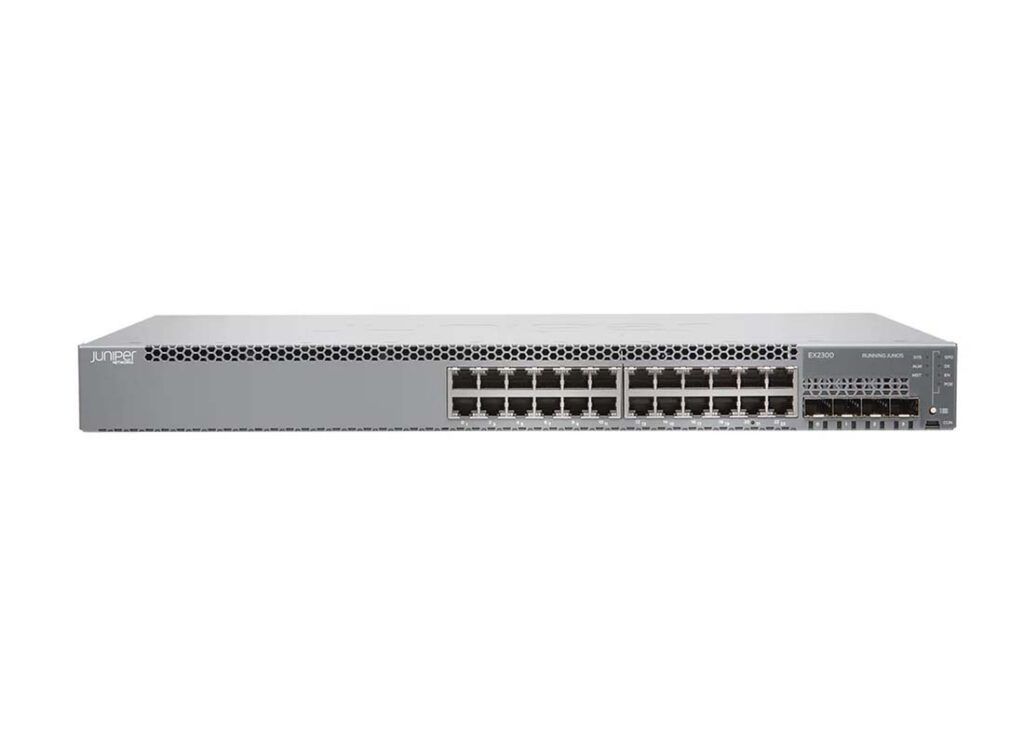

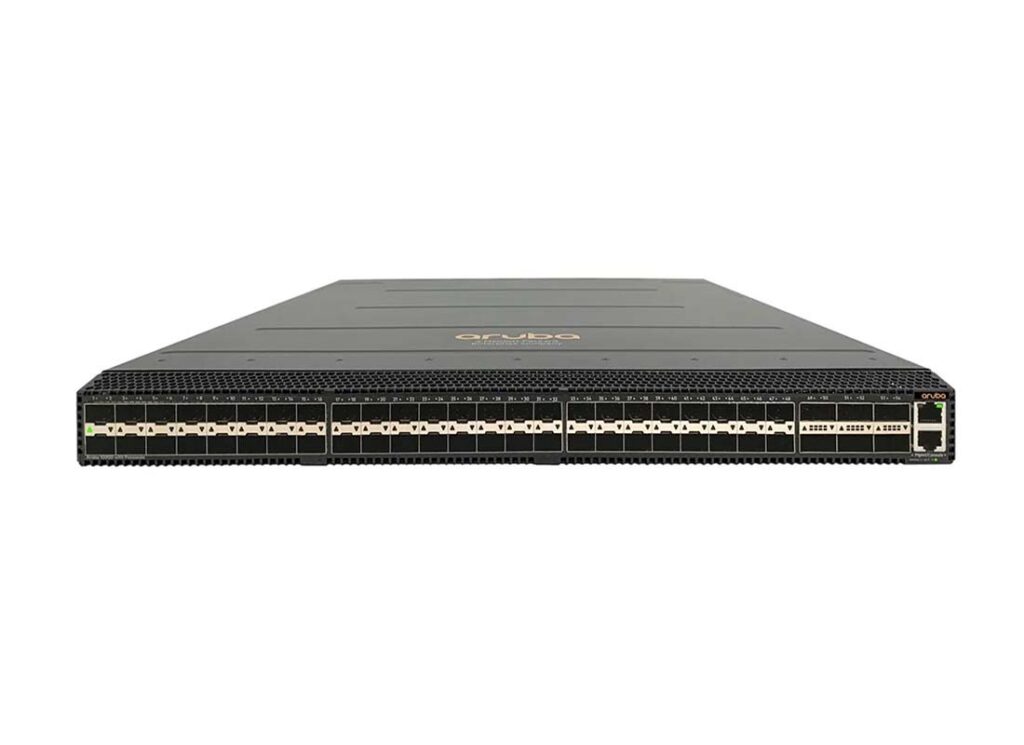
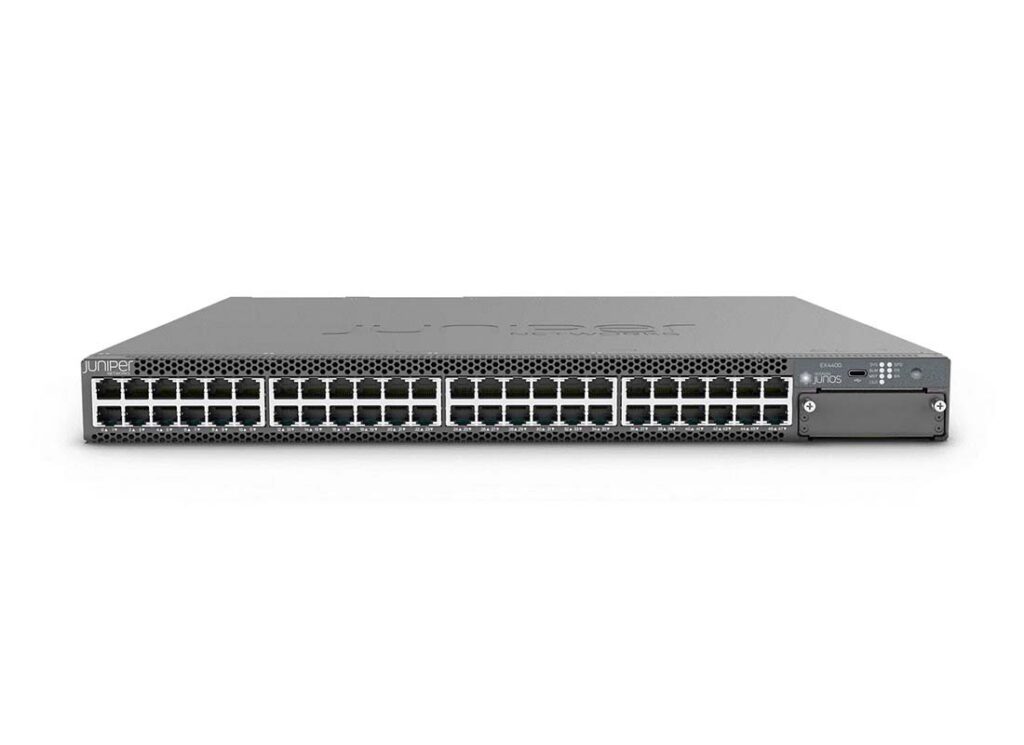
Classic network switch or AI-enabled switch?
The choice depends on your network requirements. Classic network switches are sufficient for small to medium-sized businesses with manageable data volumes. For higher data volumes, large businesses or data centres, an AI switch should be considered.
Still unsure? We would be happy to advise you on which switch type is right for you! You will also find a large selection of high-quality switches from brands such as Cisco, HPE Aruba, Juniper, Brocade, Fortinet and SonicWall in our shop. Simply use our enquiry form to secure your desired switch.